
The purpose of thermal break materials and systems (thermal breaks) is to reduce the impact of thermal bridging by preventing conductive heat flow through the thermal envelope. Structural Thermal Break Systems keep the heat in and push the dew point out. They break the bridge.
Research has shown that thermal bridging can increase the whole-building conductive heat loss by more than 15%. The percentage is a function of the following variables: climate, building type, location and type of the thermal bridges. The magnitude and quantity of the thermal bridging is a large factor. Some interface details increase the U value of a wall by 45% or more, other transition details increase the U value by only 5%.
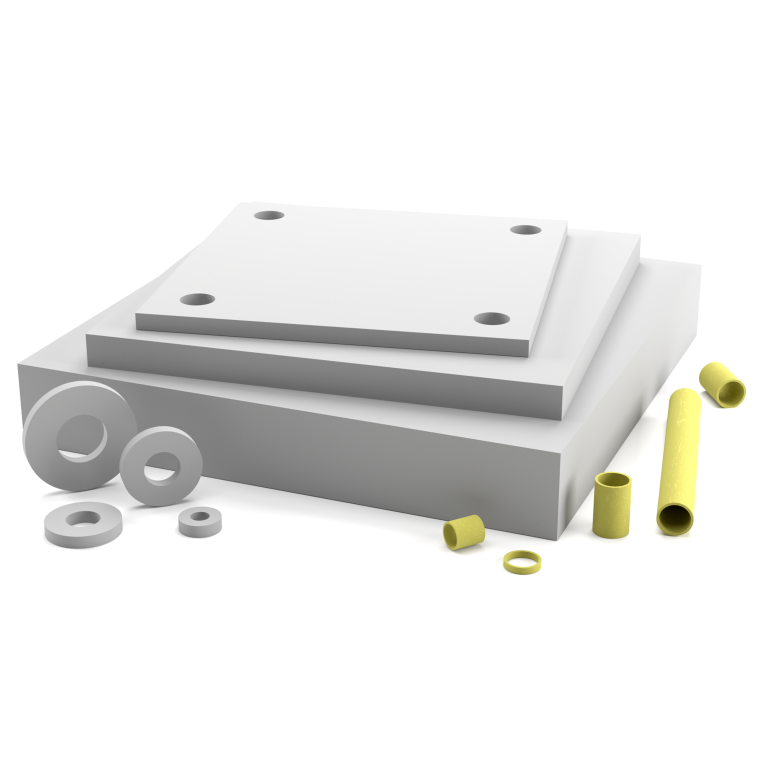
Reducing Heat Loss: The Importance of Thermal Breaks
The purpose of thermal break materials and systems (thermal breaks) is to reduce the impact of thermal bridging by preventing conductive heat flow through the thermal envelope. Thermal breaks keep the heat in and push the dew point out. They break the bridge.
Research has shown that thermal bridging can increase the whole-building conductive heat loss by more than 15%. The percentage is a function of the following variables: climate, building type, location and type of the thermal bridges. The magnitude and quantity of the thermal bridging is a large factor. Some interface details increase the U value of a wall by 45% or more, other transition details increase the U value by only 5%.

STB-1 Structural Thermal Break is available for fast delivery anywhere!
Typically in urgent situations STB-1 Structural Thermal Break can ship in as little as 24 hours!
STB-1 Thermal Break Pads are often called Thermal Bridges, balcony isolators, structural thermal breaks, cantilever steelwork thermal bridging, cold bridge isolation, thermal partitions, steelwork thermal break, thermal bridging, cold bridging pads, cold bridging solutions. All of these solutions use Thermal Insulation Material to prevent thermal bridging.
A complete STB-1 Structural Thermal Break system include a thermal break pad, 2 Thermal Break Washers, 2 Thermal Break Bushings and 4 USS Grade 8 steel washers.
With more code changes coming into play each year to protect the future of the construction industry, STB-1 Structural Thermal Break can be used in renovation projects to rectify a number of poorly isolated connections within existing buildings, as well as structures under construction to make them as efficient as possible. To achieve this and work towards making any building as efficient as possible, these solutions need to be considered within the earliest stages of a construction project, which is why it’s imperative for architects to understand the importance of these products and how they can help a structure meet certain efficiency criteria.
When using STB-1 Structural Thermal Break pads in a parapet roof location, the U value of the roof assembly will be improved, and the potential chances of condensation problems occurring will be prevented at the structural connection.
STB-1 Structural Thermal Break is a structural high performance thermal break material which delivers thermal insulation between interior and exterior steelwork, and / or concrete, to prevent thermal bridging.
STB-1 Structural Thermal Break can help work towards improving building envelope performance, dramatically reducing heat loss and preventing surface condensation from forming inside the building that can be caused by cold transfer meeting warm air.
The thermal conductivity of a material is a function of its conductance which helps determine the rate at which heat flows through that material. Heat flow is also dependent on area and temperature.
Conductance is a function of thickness, so to be effective at reducing heat flow through a bolted, steel connection, the thickness of the thermal break is important.
STB-1 Structural Thermal Break material is available in several thicknesses to accommodate a wide range of connection details. In any connection design, the goal is to use the appropriate thickness/area which helps meet energy code requirements for the wall or roof assembly.
STB-1 Structural Thermal Break concrete connections address high risk structural steel connections and the thermal loss they create.
Mechanical Properties STB-1
| Tensile Strength | PSI (MPa) | ASTM D638 | 11,000 (75.8) |
|---|---|---|---|
| Flexural Strength | PSI (MPa) | ASTM D790 | 25,000 (172.4) |
| Compressive Strength | PSI (MPa) | ASTM D695 | 48,000 (330.9) |
| Compressive Modulus - 1" (25.4 mm) thick | PSI (MPa) | ASTM D695 | 835,254 (5768.87) |
| Shear Strength | PSI (MPa) | ASTM D732 | 16,326 (112.56) |
| Operating Temperature Range | F (C) | - | -20 to +250 (-29 to + 121) |
| Thickness | Inch (MM) | - | 1/4, 1/2, 3/4, 1. 2 (6.4, 12.7, 19.1, 25.4, 50.8) |
Flame Resistance (Nominal)
| Oxygen Index | % O2 | ASTM D2863 | 21.8 |
|---|
Thermal Properties (Nominal)
| Coefficient of Thermal Expansion | in/in/Cx10-5 | ASTM D696 | 2.2 |
|---|---|---|---|
| Thermal Conductivity | BTU/Hr/ft2/in/F | ASTM C177 | 1.055 |
| Density | lb/ft3 (Kg/M3) | 115 (1842) | |
| **Reference: Thermal Conductivity of Steel | BTU/Hr/ft2/in/F (W/m*K) | 374.5 (54.0) |
Mechanical Properties
| Modulus of Elasticity in Flexure | PSI D-790 | PSI | 1.6 x 10⁶ |
|---|---|---|---|
| Bond Strength, 1/2" Thickness, PSI | D-229 | PSI | 1,200 |
| Impact Strength, Izod Edgewise | D-256 | Ft lbs / In. Notch | 8.5 |
Physical Properties
| Barcol Hardness | Barcol | Scale | 48 |
|---|---|---|---|
| Water Absorption, % | D-229 | % | 0.35 |
| UL Flammability | UL94 | Class | HB |
| Flame Resistance, Seconds Ignition Time Burning Time |
D-229 D-229 |
Seconds Seconds |
103 211 |
Electrical Properties
| Dielectric Strength, Short Time in Oil 1/16", VPM | D-149 | VPM | 500 |
|---|---|---|---|
| Dielectric Strength, Parallel, Step-By-Step In Oil, KV | D-149 | KV | 60.0 |
| Arc Resistance, Seconds | D-495 | Seconds | 150 |
| Dielectric Constant @60HZ | D-150 | 4.8 | |
| Dissipation Factor @60HZ | D-150 | 0.02 |
Unless otherwise indicated, all properties published are based on test performed on standard ASTM test samples and according to ASTM test methods. Values shown are for test samples made from production materials and they are believed to be conservative. No warranty is to be construed, however, in fabricated or molded form, parts may vary considerably from this standard test data.
Benchmark accepts no responsibility for individual results obtained. Everyone is strongly recommended to verify data and obtain their own independent test results. This data is subject to change without notice.
Typical STB-1 Structural Thermal Break Connection
Structural Thermal Break (STB-1) is available in thickness of 1/4″, 1/2″, 3/4″, 1″and 2″. In any connection design using a thermal break, the goal is to find the appropriate thickness and area combination that helps the wall or roof assembly meet the U value requirement based on climate zone and energy code.
Structural Thermal Break (STB-1) reduces heat loss at balcony, canopy, shelf angle, roof post and other structural connections.
Structural Thermal Break (STB-1) is a thermoset, reinforced composite. It can transfer loading conditions up to 48,000 psi and has very good fire properties. The material has been designed to form a char when exposed to flame and reduce the amount of oxygen available to a fire.

Examples Of Connections
Steel Canopy And Balcony Connections
Parapet And Roof Penetration Connections
Steel Column Base
Roof-To-Wall Intersections, Parapets And Roof Penetration Connections
Steel Column Base And Foundation Wall
The Benchmark machining process:
Benchmark employs a variety of state of the art machining processes to fabricate STB-1 Structural Thermal Break Pads, Vibsorb Vibration Absorption Pads, PTFE Slide Bearings, Vibsorb Elastomeric Bearings and Vibsorb Expansion Bearings.
Depending on the material being cut or bonded Benchmark will use CNC Router Machines, Waterjet Cutters, CNC Laser, Hydraulic Presses and more. Since we keep many of these machines “in house” we are able to dramatically reduce our processing time compared to alternative products.
Please call 800 580 4195 or email us today for engineer / architect design packages or data sheets for any of our Structural Thermal Break or Vibration Control Systems.
Please fill out the below form to receive more information about STB-1 Structural Thermal Break.
Our typical response time is under 2 hours.
Additional Thermal Break and Vibration control products we stock in Canada & USA for fast fabrication and shipment:

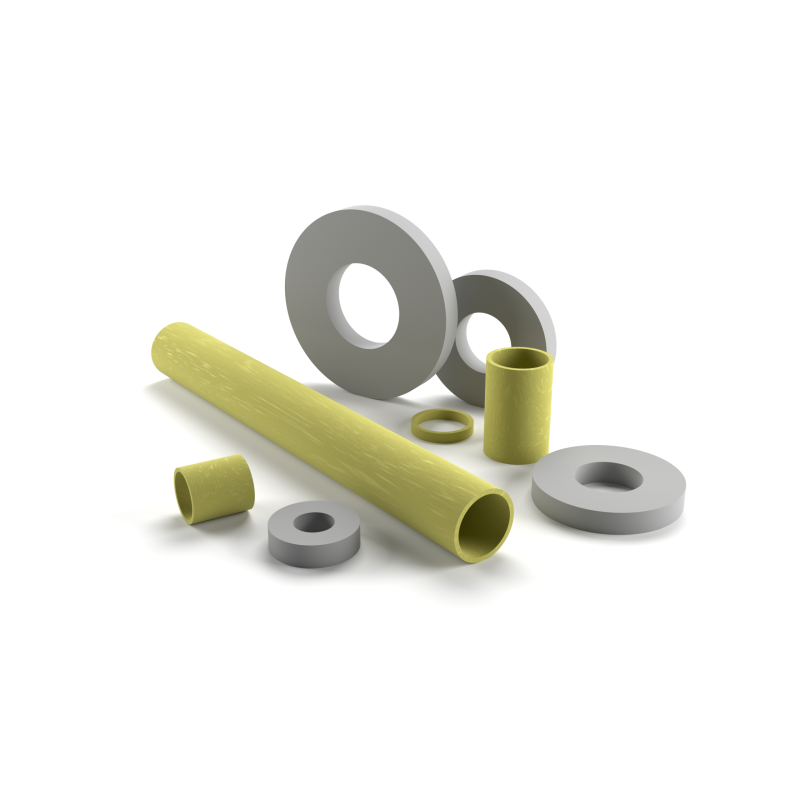
Thermal Isolation Pad, Load-Bearing Thermal Break, Thermal Bridging Plate, Structural Insulation Block, Fabreeka Pad, Armatherm, Tico Pad, Farrat Plate, Steel-to-steel thermal break, cold bridge isolation, balcony thermal break, thermal shim, Thermal Bridge Breaker, Cold Bridge Insulation, Steel Connection Isolator, Thermal Interface Material (TIM) for construction, High-compressive Strength Thermal Pad, Anti-Condensation Plate, Thermal Partition, Structural Thermal Spacer.
structural thermal break
thermal break plate
structural thermal break plate
steel thermal break plate
balcony thermal break plate
cantilever balcony thermal break
masonry shelf angle thermal break
steel beam thermal break
steel column thermal break
thermal bridge insulation
thermal bridge solution
thermal break building envelope
thermal bridging structural steel
thermal break building construction
thermal break structural connection
thermal break insulation plate